Views: 9 Author: Zhengzhou Known Imp.& Exp. Co., Ltd. Publish Time: 21-01-2026 Origin: Zhengzhou Known Imp.& Exp. Co., Ltd.


A practical, real-world guide for U.S. coffee entrepreneurs
If you've ever stood in line at a coffee truck and thought, “I could do this better”, you're not alone. Every week at ZZKNOWN, we talk with first-time founders, former baristas, and seasoned food truck operators who all ask the same question:
“What coffee truck size should I actually buy?”
It sounds simple, but it's one of the most expensive mistakes you can make if you get it wrong.
Too small? You'll fight bottlenecks, slow service, and limited menus.
Too big? You'll overpay, struggle with permits, and waste space you never use.
This guide breaks down the best coffee truck sizes for different business models in the U.S., based on real customer builds, real sales numbers, and real mistakes we've seen over the last 15+ years.
I'll explain it like I would to a friend who's about to spend their own money.

Before we talk numbers, let's talk reality.
Your coffee truck size affects:
How many drinks you can make per hour
Whether two people can work comfortably
Where you're allowed to park
How much you'll spend on fuel, permits, and maintenance
How fast you can grow your menu
We've seen operators with amazing coffee fail because their truck was wrong for their model—and average coffee succeed because the setup was perfect.
So let's start with the basics.
Most coffee trucks and coffee trailers in the U.S. fall into these size ranges:
| Truck / Trailer Length | Typical Width | Best For |
|---|---|---|
| 8–10 ft | ~6.5–7 ft | Solo operators, pop-ups |
| 10–12 ft | ~7 ft | Coffee-only menus |
| 12–14 ft | ~7–8 ft | High-volume coffee |
| 14–16 ft | ~8 ft | Coffee + food |
| 16–20 ft | ~8.5 ft | Multi-station operations |
Now let's match these sizes to actual business models.

Short answer: 8–10 ft
If you're planning to run the truck by yourself, smaller is usually smarter.
Shorter walking distance = faster service
Lower startup cost
Easier to park in urban areas
Simpler health department approval
Lower fuel and maintenance costs
1 espresso machine (2-group)
1 grinder
Undercounter fridge
Small sink system
Water tanks
Basic storage
At ZZKNOWN, many first-time buyers start here because it lets them test the market without overcommitting.
Real experience:
One customer in Oregon started with a 9 ft coffee trailer, selling only espresso, americanos, and lattes. After 6 months, he was profitable—and upgraded later without regret.

Best range: 10–12 ft
If your menu is mostly:
Espresso drinks
Lattes & cappuccinos
Cold brew
Iced coffee
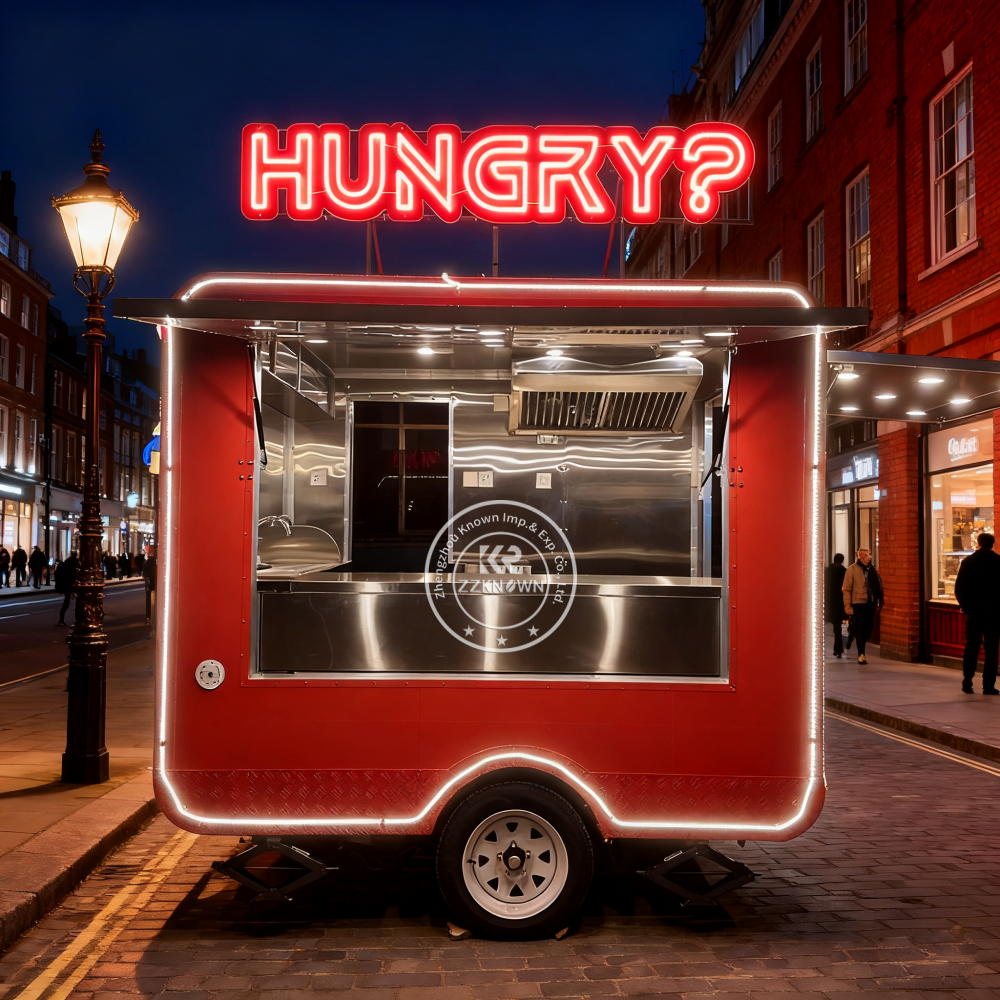
Then a 10–12 ft coffee truck size is often the sweet spot.
Enough space for two people during rush hours
Room for dual grinders
Better workflow (barista + cashier)
Still easy to park at events and office parks
People jump straight to 14 ft “just in case.”
In reality, unused space costs money and slows movement if the layout isn't intentional.
Best range: 12–14 ft
If your plan includes:
Morning rush near offices
College campuses
Transit hubs
Event-based sales (festivals, fairs)
Then speed matters more than footprint.
Two espresso machines or one high-capacity unit
Dedicated prep zone
Larger refrigerators
Clear barista flow paths
Storage for peak-hour inventory
At ZZKNOWN, most serious full-time coffee truck businesses in the U.S. land in this size range.
Data insight:
Industry benchmarks show coffee trucks in the 12–14 ft range can serve 30–40% more drinks per hour than 10 ft units when properly laid out.

This is where people often underestimate space.
Waffles
Donuts
Breakfast sandwiches
Pastries warmed on-site
Recommended size: 14–16 ft minimum
Food means:
Extra equipment (waffle makers, griddles, ovens)
More sinks
More storage
Health department spacing rules
Trying to squeeze food into a small coffee truck usually leads to:
Failed inspections
Unsafe workflows
Staff burnout
We've rebuilt several trucks for customers who tried to “save money” by going too small—and ended up spending more later.

Short answer: No.
Bigger only makes sense if:
Your sales volume supports it
Your locations allow it
Your staff can operate it efficiently
Multiple service stations
Larger menu flexibility
Event scalability
Higher upfront cost
More permits
Harder parking
Higher fuel consumption
For most U.S. coffee startups, bigger is not better—better is better.

This part is often overlooked.
Different cities and counties have:
Maximum length limits
Weight restrictions
Parking zoning rules
Fire safety spacing requirements
A 10–12 ft coffee truck is:
Easier to permit
Easier to relocate
Easier to insure
At ZZKNOWN, we always ask customers where they plan to operate before recommending a size.
Here's the exact process we recommend:
Define your menu first
Estimate hourly drink volume
Decide solo vs team operation
Check local regulations
Plan for 12–18 months, not 5 years
Design layout before finalizing size
Truck size should support the coffee business—not lead it.

A Texas client chose a 12 ft coffee truck with a clean espresso-only menu.
Result: Paid off the truck in under 9 months.
A California buyer ordered a 16 ft truck for basic coffee only.
Too big, too slow, too expensive.
We redesigned the layout—but the extra cost hurt early cash flow.
| Coffee Truck Size | Typical Cost Range (USD) |
|---|---|
| 8–10 ft | $4,000 – $8,000 |
| 10–12 ft | $8,000 – $15,000 |
| 12–14 ft | $12,000 – $18,000 |
| 14–16 ft | $15,000 – $23,000 |
(Prices vary by equipment and customization.)
12–14 ft is the most common for full-time operators.
Yes—and many successful operators do exactly that.
Trailers often offer more usable interior space at the same length.
8–10 ft: 1 person
10–12 ft: 1–2 people
12–14 ft: 2–3 people
If there's one thing we've learned after building hundreds of coffee trucks:
The best coffee truck size is the one that fits your workflow—not your ego.
Start smart. Grow intentionally. Design for how you actually work.
If you'd like help choosing the right coffee truck size, layout, or equipment configuration, the ZZKNOWN team is always happy to share real experience—not sales pressure.